Signed in as:
filler@godaddy.com
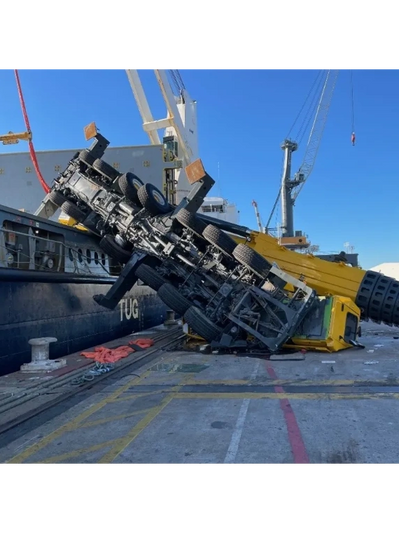
Most crane accidents are not caused by a single mistake — they develop from a chain of operational decisions, equipment conditions, and communication breakdowns that occur on real construction sites.
When attorneys investigate a crane accident or crane incident, they often begin by reviewing regulations, engineering reports, and written procedures. Those documents are important, but they rarely explain what was actually happening on the jobsite when the lift occurred.
Crane operations take place in constantly changing environments.
Ground conditions change.
Weather conditions change.
Jobsite congestion changes.
Lift plans evolve once work begins.
After more than 35 years working in crane operations, one reality becomes clear:
Most crane accidents develop from multiple factors working together.
Understanding those factors requires experience with real crane operations, lift planning, rigging practices, and construction jobsite conditions.
⸻
Common Factors in Crane Accidents
Many crane accidents and crane incidents involve a combination of issues such as:
These issues rarely occur alone. When several develop at the same time, the margin for safe crane operations becomes smaller.
⸻
Communication Is Critical in Crane Operations
Safe crane operations depend heavily on clear communication between multiple teams.
A typical crane operation involves coordination between:
When communication works well, potential problems can often be identified early.
However, in many construction environments there can be gaps between the office and the field.
Field crews frequently need real-time answers regarding:
Those answers are not always immediately available.
Sometimes the personnel who prepared the lift plan are not present on the job site, or the conditions in the field are different from what was originally planned.
⸻
Human Factors and Decision-Making
Crane operations also involve human decision-making under pressure.
Construction crews take pride in their work, and people do not always want to admit when they are uncertain about a lift or a rigging setup.
Over time, experienced crane operators learn that one of the most important safety tools available to them is the ability to say:
“No.”
Saying no when conditions are not right can prevent a crane accident.
Strong leadership and open communication help crews maintain safe crane operations even when conditions change.
⸻
Business Pressures in the Crane Industry
The crane and construction industries are also service industries.
Companies must keep equipment working and projects moving in order to remain profitable.
Because of this reality, field crews sometimes work in environments where production pressure exists.
Situations may arise where:
These pressures can create confusion for field crews who are trying to perform lifts safely while also meeting project schedules.
⸻
Maintenance and Equipment Condition
Crane safety also depends heavily on equipment condition and maintenance practices.
Crane mechanics and maintenance teams play an important role in keeping cranes and lifting equipment operating safely.
Cranes operate under demanding conditions including:
Over time, maintenance issues or equipment wear can develop, and these conditions can influence crane operations.
Understanding equipment condition is often an important part of evaluating crane accidents, crane incidents, and lifting failures.
⸻
Job site Logistics and Equipment Coordination
Crane operations also involve complex logistics.
Large cranes require multiple tractor-trailers transporting:
These trucks must often maneuver through tight or congested construction sites.
Many sites also rely heavily on forklifts and telehandlers to move materials and lifting equipment.
Coordinating crane assembly, truck movement, forklift operations, and lifting activities requires careful planning and constant communication.
⸻
Real Construction Sites Are Complex Environments
Most crane operations take place in environments involving:
At the same time, conditions such as ground support, weather, wind, site congestion, and rigging configuration can change throughout the day.
Understanding how these conditions interact is critical when evaluating crane accidents, crane collapse events, rigging failures, and lifting incidents.
⸻
Safe Crane Operations Require Transparency and Coordination
Safe crane operations cannot be achieved simply by completing paperwork or checking boxes on forms.
Real safety requires:
Achieving this level of coordination is often difficult in fast-moving construction environments, but it is essential for safe lifting operations.
⸻
Field Experience Matters
Evaluating a crane accident or crane incident requires understanding how lifting operations actually occur on construction sites.
Engineering analysis and documents provide useful information, but they do not always capture the real-time decisions crews were making on the job site.
Field experience helps explain:
This perspective can be critical when analyzing crane accidents, rigging failures, lift planning disputes, and crane collapse events.
⸻
Independent Crane Expert Witness
Edward C. Guerra provides independent analysis in matters involving:
With more than 35 years of hands-on crane operations experience, his evaluations focus on the operational realities present at the time of the incident.
This experience helps translate complex crane operations into clear explanations for attorneys, judges, and juries.
⸻
Available for Case Evaluation
For matters involving crane accidents, crane collapse events, rigging failures, forklift incidents, or crane operational analysis:
Edward C. Guerra
Independent Crane Expert Witness
Nationwide Availability